
OPEN WATER SAFETY
Open water can be a fantastic place to swim, explore and enjoy the outdoors, but it comes with risks that aren’t always visible. Cold water, strong currents, changing weather and hidden hazards can affect even the most confident swimmers. Understanding these dangers and knowing how to stay safe is essential whenever you’re around open water.
Swim England’s Water Safety Code is important advice for all kids to learn.
Water Safety Code

1. Stop and think – Always Swim in a Safe Place
Swimmers need to know the dangers when swimming outdoors and preferably swim at a lifeguard beach, organised session or supervised venue.
There are many dangers with water, which can include:
- Cold water: many drownings happen almost immediately on entry because of cold water shock; this is quickly followed by Swim Failure when the nerves and muscles get too cold to work effectively
- Hidden currents under the water
- Not being able to determine the depth of water due to poor clarity
- Poor quality, leading to illness
- Uneven and slippery surfaces that present as unsafe to walk on
- Discarded rubbish that would cause harm
2. Stay together – Always swim with an adult
When swimming outdoors, you must always stay together. With younger children, keep them within arm’s reach when in or around the water.
- Never go alone!
- Tell a family member where you are going and when you will be back
- Swimmers should always swim with an adult to ensure their safety.
- By having an able adult to supervise them, swimmers will have an extra set of eyes watching for their safety and looking out for potential dangers.
- Make sure you have the right equipment for your activity, for example, a bright hat and tow float for outdoor swimming or buoyancy aids and the correct leash when paddleboarding. A whistle and mobile phone in a waterproof pouch also help.
3. Float
If you fall into the water unexpectedly – float on your back until you can control your breathing. Then, either call for help or swim to safety.
4. Call 999
If you see someone in trouble, you must tell somebody or go to the nearest telephone and dial 999. Then ask for the Fire Service at inland water sites and the Coastguard at the beach. If you are at a swimming pool, you must tell the lifeguard. Throw something that floats for the person to hold on to but don’t enter the water to help.
Swimsound’s Safety Tips
-
Respect the water.
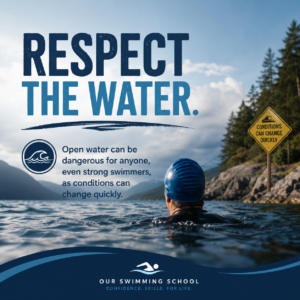
Open water can be dangerous for anyone, even strong swimmers, as conditions can change quickly.
-
Cold water shock is a major risk.
Cold water can cause involuntary gasps and rapid breathing. This can occur at water temperatures below15°C. Best to test the water out before fully entering and let your body slowly and fully acclimatise to the water.
How to deal with cold water shock:
- Tilt your head and submerge your ears.
- Relax and control your breathing.
- Move your hands and legs to help you stay afloat.
- You may find your legs sink, but that’s okay, as everyone has their own way of floating.
- Practice to find your float while supervised.
-
Never swim alone.
Always better to swim with other people when possible; if not, then make sure to let someone else know where you are going and when you are expected to return.
-
Check conditions before entering.
Be aware of weather forecasts, tides, currents, river flow, and water quality. Avoid entering water during storms, high winds, or poor visibility.
-
Know what to do if you get into difficulty.
Stay calm, float on your back, and signal and shout for help.
-
If you see someone in trouble: Call, Tell, Throw.
Call emergency services, tell others nearby, throw a floatation aid if available, and do not enter the water to attempt to rescue unless trained & equipped.
-
Supervise children closely.
Constant, uninterrupted supervision is essential around any body of water; drowning can happen quickly and quietly.

At Swimsound, we are offering lessons with a big focus on water safety.
Book your Swimming Lessons with Swimsound Now: Swimsound Summer Course Booking